
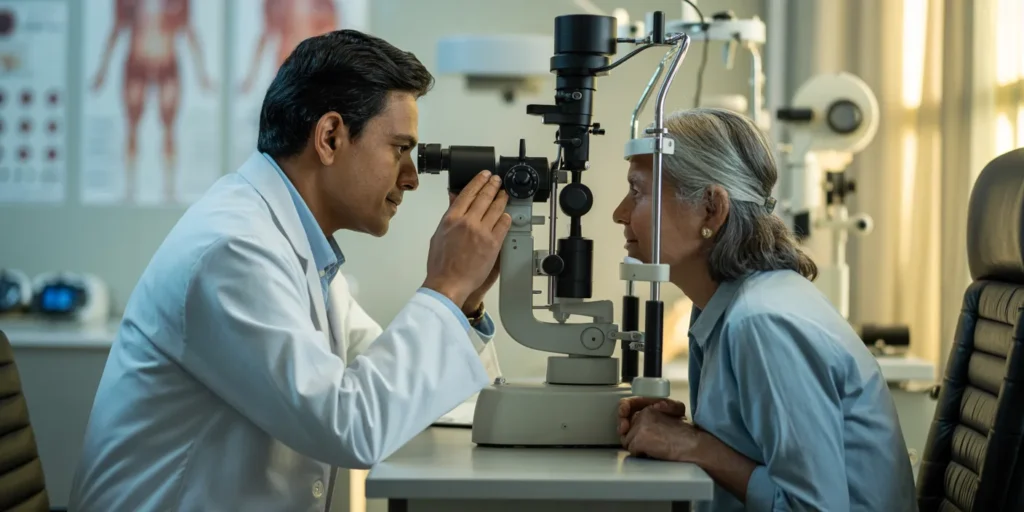
Glaucoma often has no early symptoms. Learn why regular eye exams are crucial for early detection and how Chevron Eye Hospital’s glaucoma specialists can help protect your vision for life.
Imagine losing your vision gradually, starting from the edges, and not noticing anything wrong until the damage is permanent. This is the reality of glaucoma, often called the “silent thief of sight.” It is one of the leading causes of irreversible blindness worldwide, but with early detection and proper management, vision loss can be prevented.
At Chevron Eye Hospital and Research Center in Panchlaish, Chattogram, our team, including renowned Glaucoma Specialist Dr. M A Karim PhD, FRCS, provides advanced, precise, and compassionate glaucoma care to safeguard your eye health.
What is Glaucoma?
Glaucoma is a group of eye conditions that damage the optic nerve—the vital cable connecting your eye to your brain. This damage is often caused by abnormally high pressure in your eye. The frightening part? In its most common forms, glaucoma has no early warning signs. You won’t feel pain, and your central vision remains sharp until the disease is quite advanced.
Who is at risk?
While anyone can develop glaucoma, your risk is higher if you:
- Are over 40 years old.
- Have a family history of glaucoma.
- Have underlying health conditions like diabetes, high blood pressure, or heart disease.
- Are severely nearsighted or farsighted.
- Have had an eye injury or used steroid medications long-term.
How is glaucoma treated?
While vision lost to glaucoma cannot be restored, treatment can stop it from getting worse. At Chevron Eye Hospital, we offer a full spectrum of care:
- Medication: Prescription eye drops can help lower eye pressure.
- Laser Treatment: We use advanced lasers to help fluid drain from the eye.
- Surgery: For more advanced cases, our skilled surgeons perform procedures to create a new drainage channel.
The key takeaway? Regular comprehensive eye exams are your best defense. During a routine checkup, we can measure your eye pressure and examine your optic nerve for early signs of damage. If you are over 40 or have any risk factors, don’t wait for symptoms. Schedule an exam today at our center on O.R. Nizam Road. Protecting your sight from the “silent thief” starts with a single, simple appointment.